StrategyCommercePrioritizationCross-Functional Delivery

Warner Bros. Games

Scaling Web Commerce Across Warner Bros. Games

Product Strategy, Prioritization, and Cross-Functional Delivery

I helped define and deliver a reusable direct-to-consumer commerce platform for a portfolio of Warner Bros. mobile games, turning distinct studio needs and monetization opportunities into a shared product direction.

My UX/UI design:Mortal Kombat: Onslaught shipped web storefront
Role
Lead UX Designer, Web Commerce and Monetization
Duration
March 2023 to March 2025
Scope
Six planned storefronts, three publicly launched during my tenure
Contribution
Platform strategy, prioritization, and cross-functional delivery

My contribution

What I personally owned

Product ownership
Defined the platform direction, prioritized the roadmap, and translated recommendations into implementation plans.
Design ownership
Designed the responsive storefront and end-to-end purchase experiences shown here, including rewards and identity transitions.
Leadership and delivery
Aligned studios with the central product, engineering, compliance, and launch teams.

I personally designed the product interfaces shown in this case study. The launched storefronts and commercial outcomes were delivered with the broader Warner Bros. Games organization and its partners.

Ambiguity

One Commerce Model for Six Different Products

How could we create a commerce model that was reusable across the portfolio without making every game feel the same?

Warner Bros. Games wanted to expand direct-to-consumer commerce across a portfolio of mobile titles. Each game had its own economy, audience, brand, and delivery context.

Building every storefront independently would duplicate work and slow delivery. A platform that was too rigid, however, would not meet the needs of individual games.

The platform also had to support secure, localized purchasing across multiple teams and markets.

01

Six planned storefronts

02

Different game economies

03

Different studio priorities

04

Shared platform dependencies

05

Global payments and compliance

Investigation

Understanding the Market, Players, and Constraints

A recurring competitive intelligence program turned market observations into evidence the portfolio could use.

50

Top-grossing games

50+

Data points per competitor

12×

Audit cadence per year

My product artifact:Competitive Analysis Matrix: Monthly Audit of Top 50 Mobile Games

I built an ongoing competitive intelligence program focused on the highest-grossing mobile games most relevant to each title.

I organized the findings into a searchable matrix that let product leaders and studios compare patterns across competitors, game categories, and monetization models. It became a recurring source of evidence for product and roadmap decisions.

  • Store structure and product discovery
  • Packaging, pricing, and promotion
  • Rewards and loyalty
  • Checkout and authentication across devices
Structure

Creating a Reusable Commerce Framework

The research showed that the platform needed a stable commerce foundation with enough flexibility to support different games.

Game-specific layer

Identity and Economy

  • Brand and content
  • Game economy
  • Offers and promotions
  • Studio-specific theming
Shared commerce layer

Reusable Purchase System

  • Product discovery
  • Bundles and offers
  • Cart and checkout
  • Rewards and incentives
Platform foundation

Trusted Infrastructure

  • Player identity
  • Payments
  • Localization and currencies
  • Legal and compliance
Product decision

Build a reusable platform foundation

Separate the shared mechanics of purchasing from the presentation and economy of each title instead of treating each storefront as a separate product.

Tradeoff

Invest in alignment before acceleration

The shared model required more coordination early in the process, but reduced duplicated decisions and created a faster path for future storefronts.

200

Point implementation guide

A 200-point implementation guide gave studios and delivery teams one definition of product scope, implementation requirements, approvals, and launch readiness.

Web Store Rollout Plan
Web Store Production Schedule
Prioritization

Deciding What Should Move First

The platform created more opportunities than the teams could pursue simultaneously. I developed a roadmap spanning more than 12 monetization experiments, with one or two controlled tests intended to run at a time.

Revenue and player valueTechnical complexityPortfolio reuseOperational dependencies
01 Evidence

Evaluate the Opportunity

Combine market intelligence, player value, expected revenue, complexity, and risk.

02 Recommendation

Set the Priority Order

Make a strong recommendation instead of treating every request as equally urgent.

03 Governance

Secure Director Approval

Validate the working order with product leadership and resolve strategic concerns.

04 Buy-in

Align the Studios

Earn approval from the teams responsible for approving, delivering, and operating the work.

I established the working feature priority order, made the recommendations, and earned approval from my director and the participating studios.

Every studio had different commercial goals and delivery constraints, so the roadmap only worked if the teams responsible for execution understood the reasoning and bought into the sequence.

Some valuable title-specific requests were sequenced behind capabilities that could unlock greater portfolio-wide value.

Alignment

Coordinating a High-Constraint Stakeholder Network

Priority became executable only when the people responsible for approval, delivery, and operation shared the same view of the work.

Game studios
Platform product and engineering
Payments and security
Shared operating system

Roadmap and Implementation Guide

A shared view of scope, ownership, dependencies, and launch readiness.

Legal and localization
Brand and IP
Quality assurance and live operations

50+

Departmental approvals could be required for an individual intellectual property

Shared product artifacts and production schedules made decisions visible and gave every group the same view of readiness.

This turned stakeholder review from a series of disconnected requests into a coordinated product process.

Execution

Moving from Framework to Public Launches

With the shared product structure and priority order in place, I helped translate the strategy into storefront experiences that could be built and launched.

3 of 6

Planned storefronts publicly launched during my tenure

Each launch applied the shared foundation to a different game while preserving its visual identity, economy, and player expectations.

  • Responsive storefront and purchase experiences
  • Merchandising and reward systems
  • Identity and account journeys
  • Studio theming and launch coordination

UX/UI design

I designed every storefront, wireframe, and UX flow shown in this section.

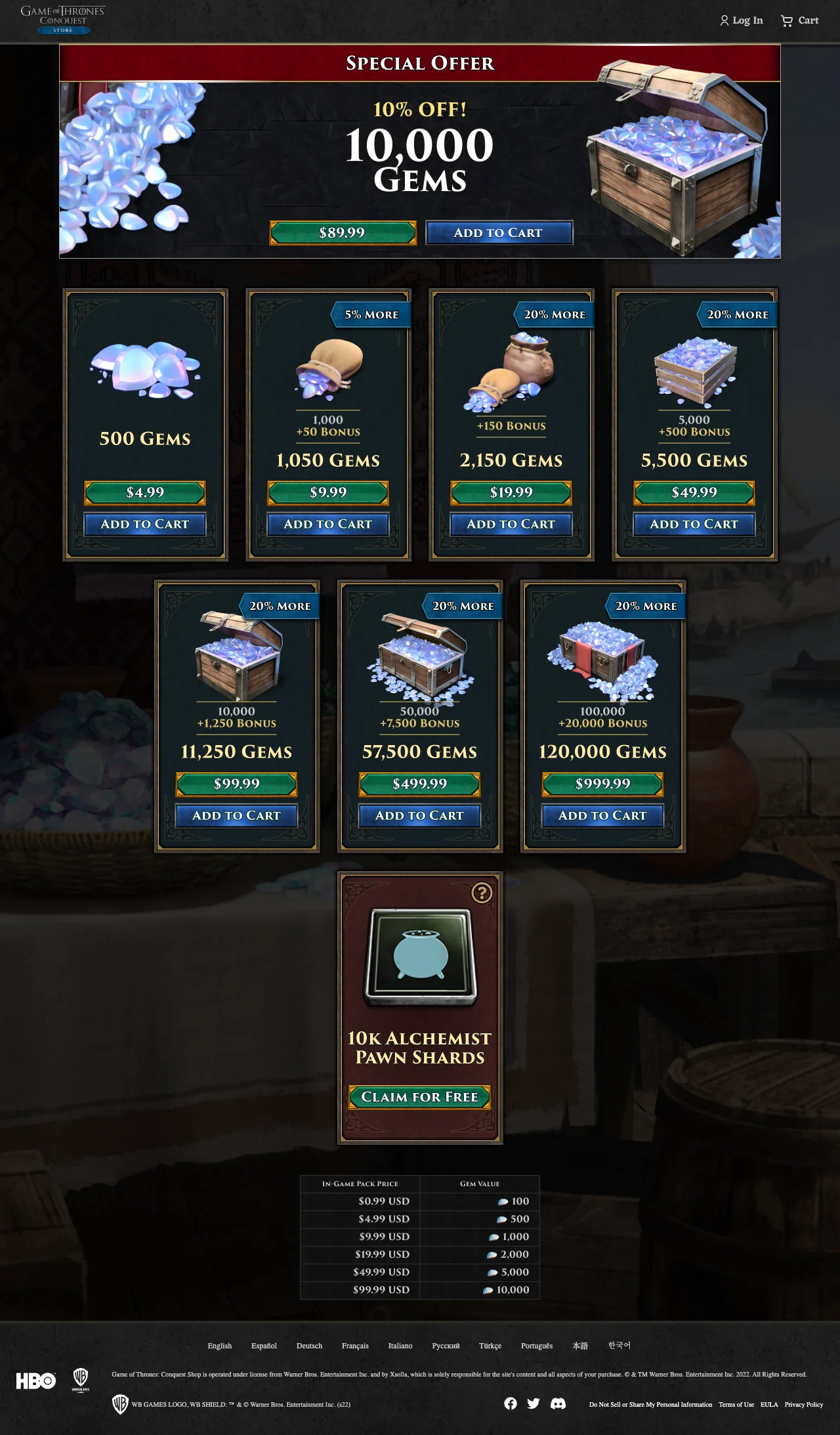
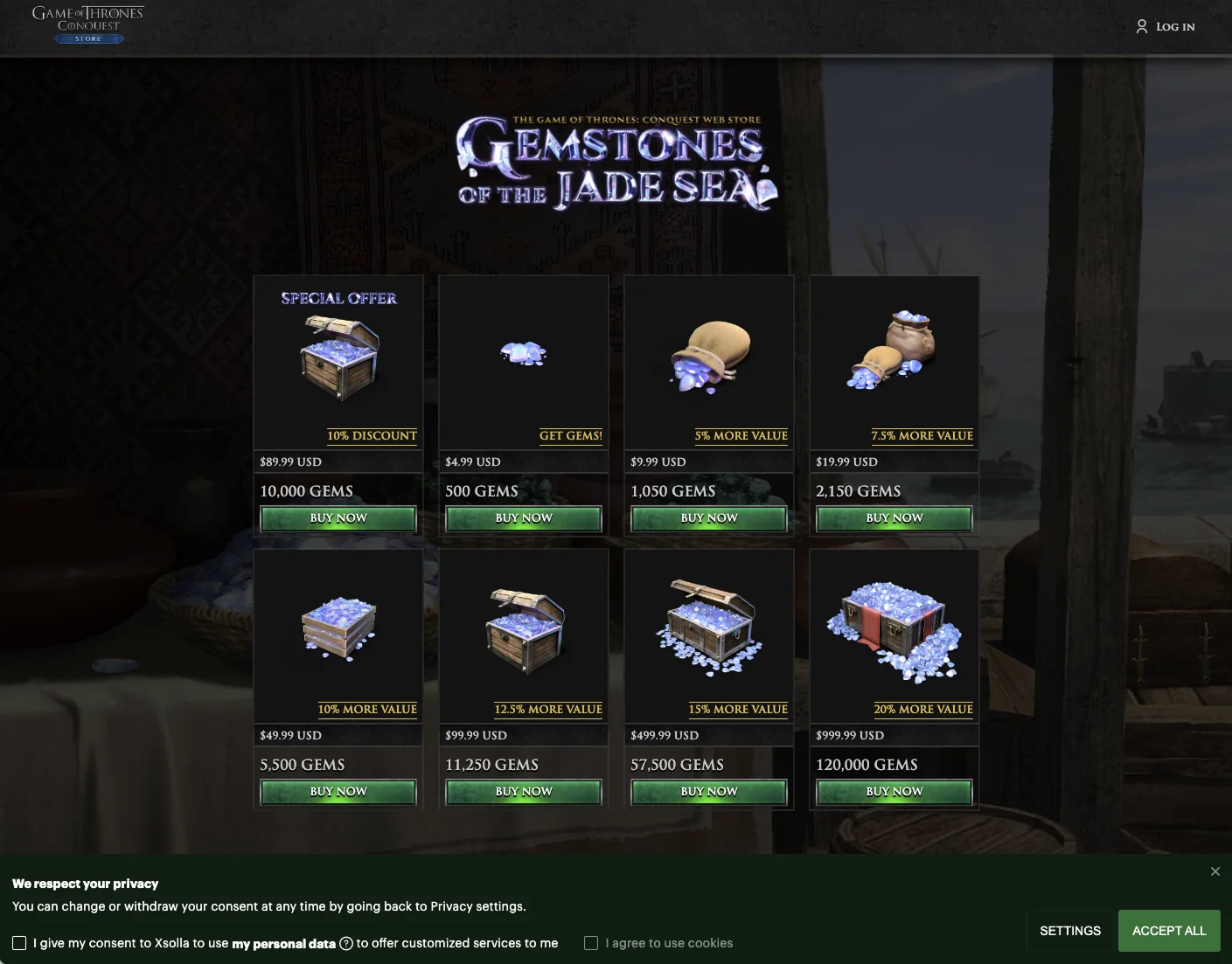
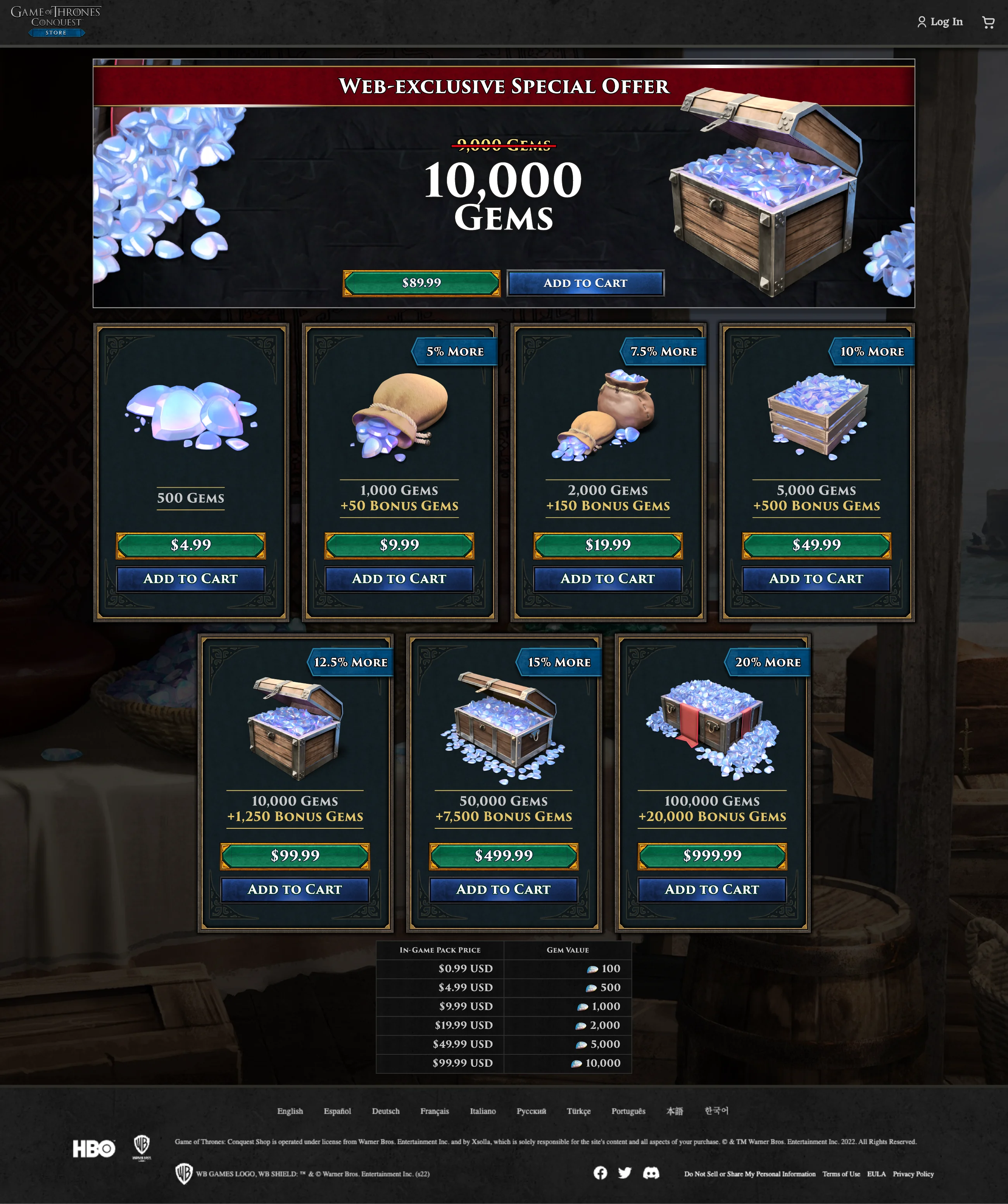
Mortal Kombat: Onslaught, Desktop and Mobile Storefront
Reward Chain: Desktop and Mobile Wireframes
Cart Experience: Desktop and Mobile Wireframes
Identity and commerce

Player Network connected identity to commerce

I partnered with the platform teams to define secure account access, age-aware permissions, and the transition into purchasing.

Identity System to Web Store Flow
Measurable Outcome

A Scalable Web Commerce Channel

$100M+

Web commerce revenue

Processed through the direct-to-consumer channel

40%+

Revenue shifted to D2C

Across participating titles, moving from in-app purchases to the web channel

3 of 6

Storefronts launched

Publicly launched during my tenure out of six planned

These figures describe the channel and the broader cross-functional program. My contribution was product definition, prioritization, UX, and delivery support.

Reusable foundation

A platform structure that could support additional games and themes.

Repeatable delivery

A shared process for approvals, implementation, and launch readiness.

Experiment capability

A structured roadmap for continued monetization testing.

Direct relationships

A stronger direct commercial connection between games and players.

Lessons

What I Learned

01

Prioritization requires evidence and buy-in

A priority order is only useful when the people responsible for approving, building, and operating it understand the reasoning. Research established the evidence, but alignment turned the recommendation into an executable roadmap.

02

Standardization creates portfolio leverage

The greatest opportunity was not a single storefront. It was a shared foundation that allowed future teams to reuse commerce patterns, technical decisions, and launch processes while preserving each title's identity.

03

Trust is part of the product

Trust had to carry from account access through payment. That transition shaped whether players felt comfortable moving from an app-store purchase to the web.

Mario worked on our Webstore initiative, where he contributed to defining and refining the overall design direction. He worked closely with product and engineering partners to ensure consistency across touchpoints and helped translate strategic goals into a cohesive player experience.

Mario's thoughtful approach and willingness to engage across teams supported the Webstore's progress from concept to launch and helped establish a solid design foundation for future iterations.


CV

Cedric Verstraete

Director of Product Management at Warner Bros. Games

Looking for a product manager who can connect strategy, prioritization, alignment, and execution?

See Other Projects